
FUT Hair Transplant in Austin - Max Coverage
When exploring the most effective surgical paths for permanent hair restoration, Follicular Unit Transplantation (FUT)—often referred to as strip harvesting—remains a common choice for achieving maximum density and coverage. If you are struggling with advanced hair loss, an FUT hair transplant in Austin offers a highly efficient, time-tested approach to restoring a full head of hair.
Designed to treat extensive hair loss in men and progressive hair loss in women, our clinic combines state-of-the-art microscopic dissection with precise artistic placement. This ensures that your newly restored hair blends seamlessly with your natural growth patterns, giving you a completely undetectable result.
FUT Hair Transplant in Austin: Maximum Coverage
Key Benefits
If patient has had prior FUT surgery, additional strip procedures will remove old scar
Do not need to shave back and sides of head, significant consideration for female patients
Key Considerations
Will leave linear scar that is typically 2-5mm wide and 15-20cm long in the back of the scalp
May be more difficult to conceal with shorter hair styles
More invasive, will need to have sutures in place for 2 weeks
Procedural steps
-
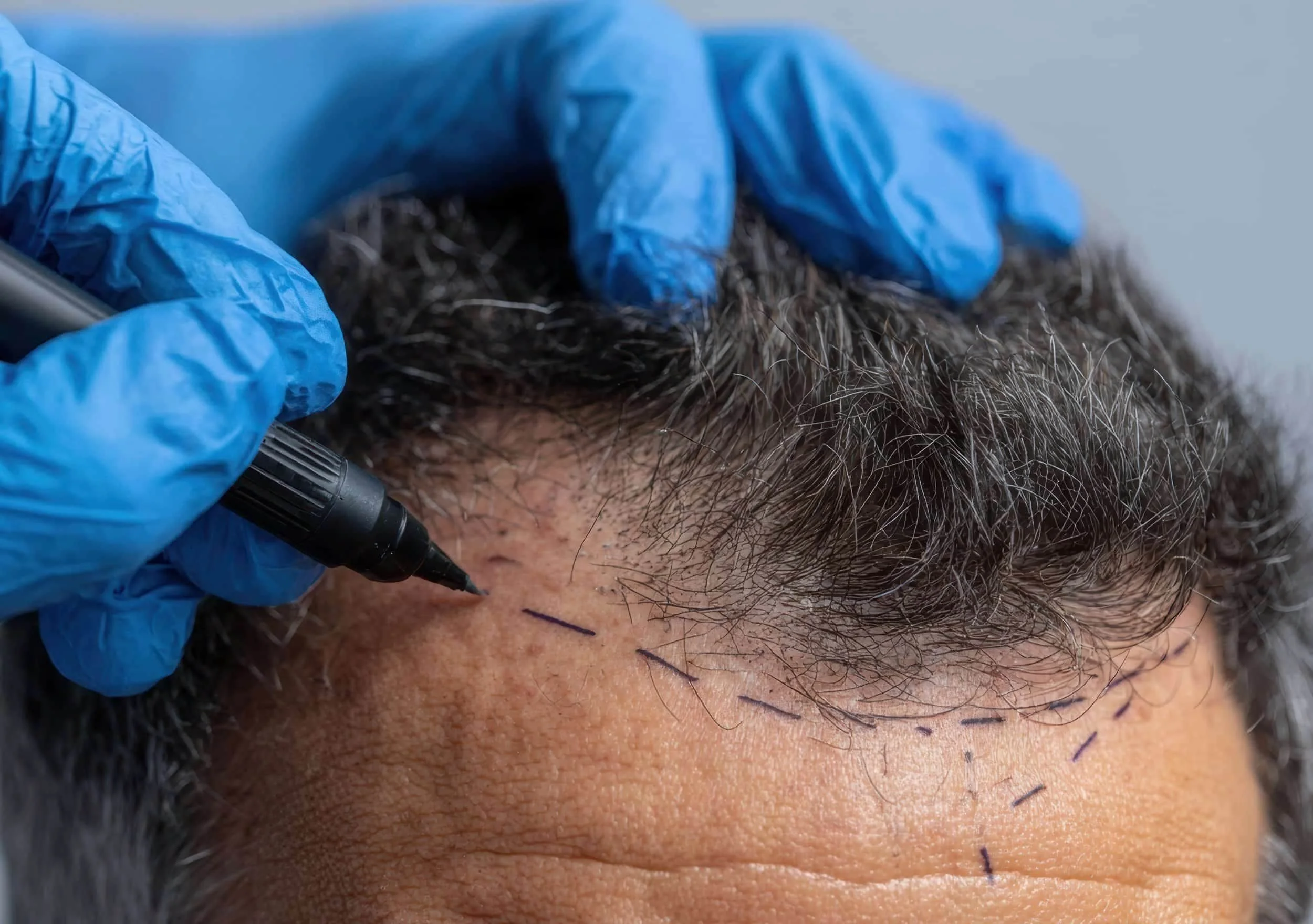
Hairline Design
-
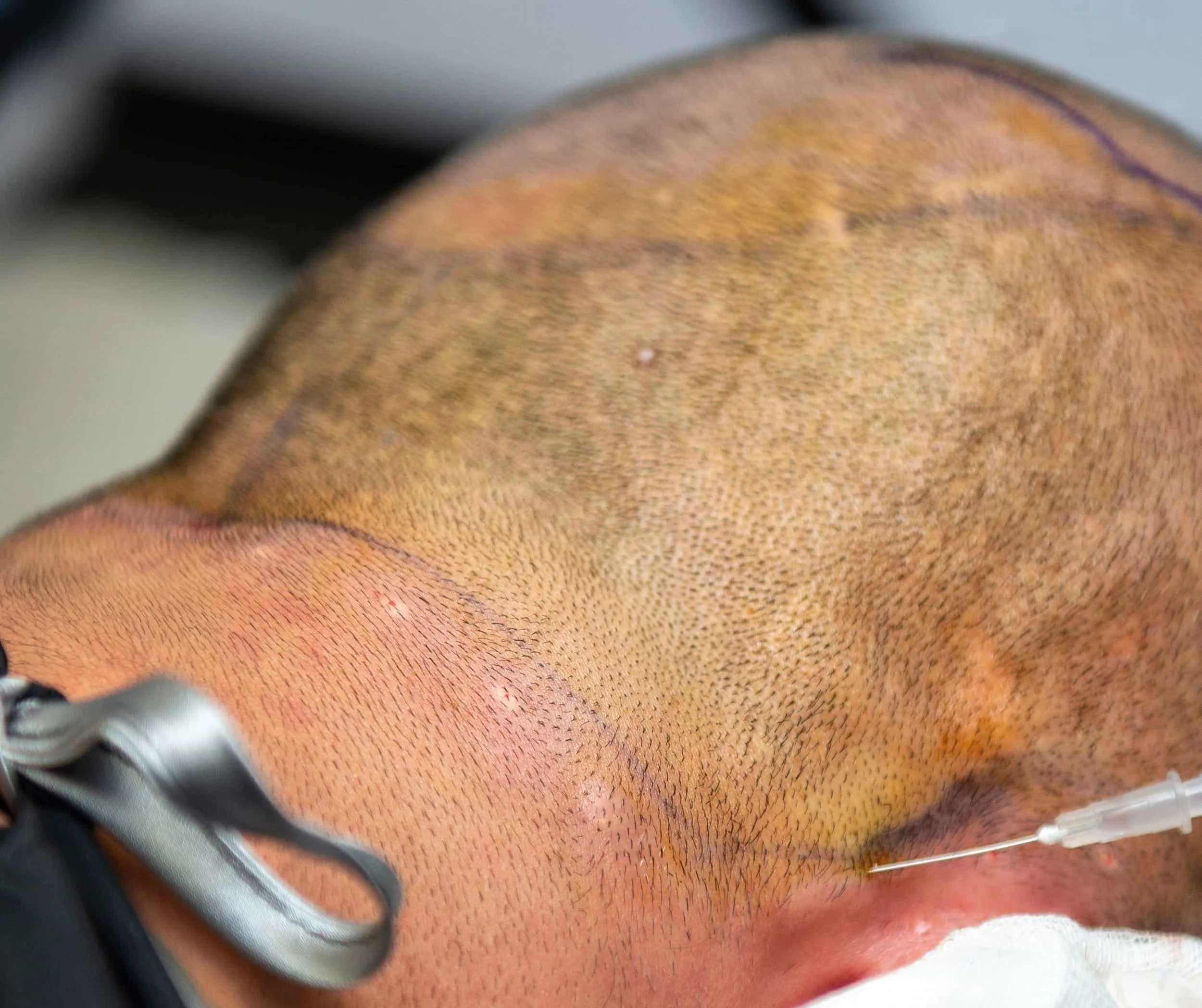
Donor Preparation
-
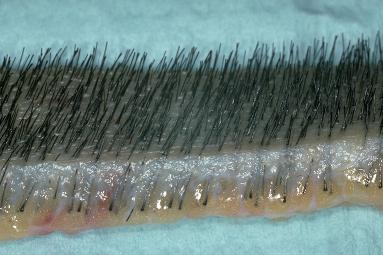
Strip Harvest and Preparation
-
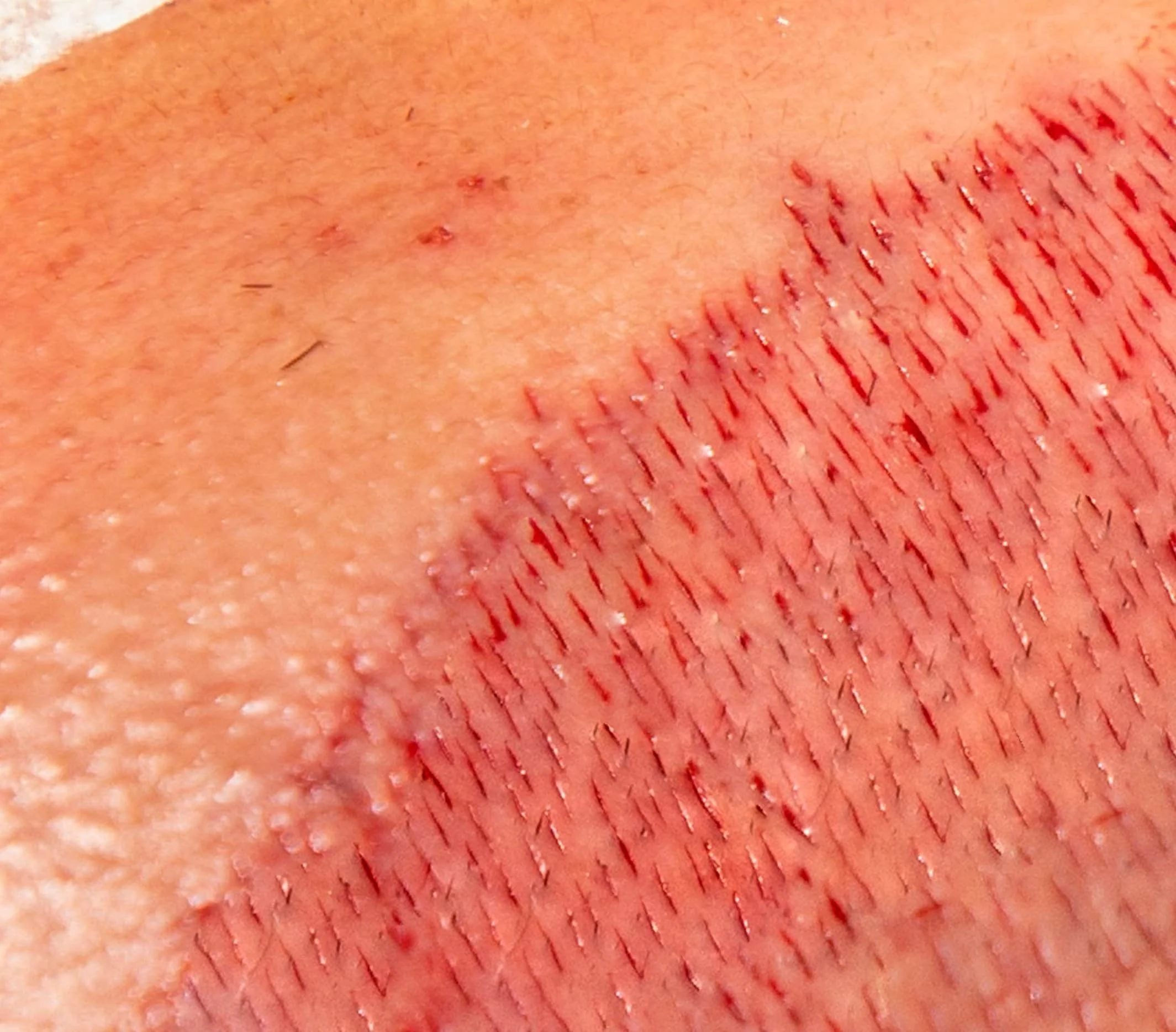
Recipient site creation
-
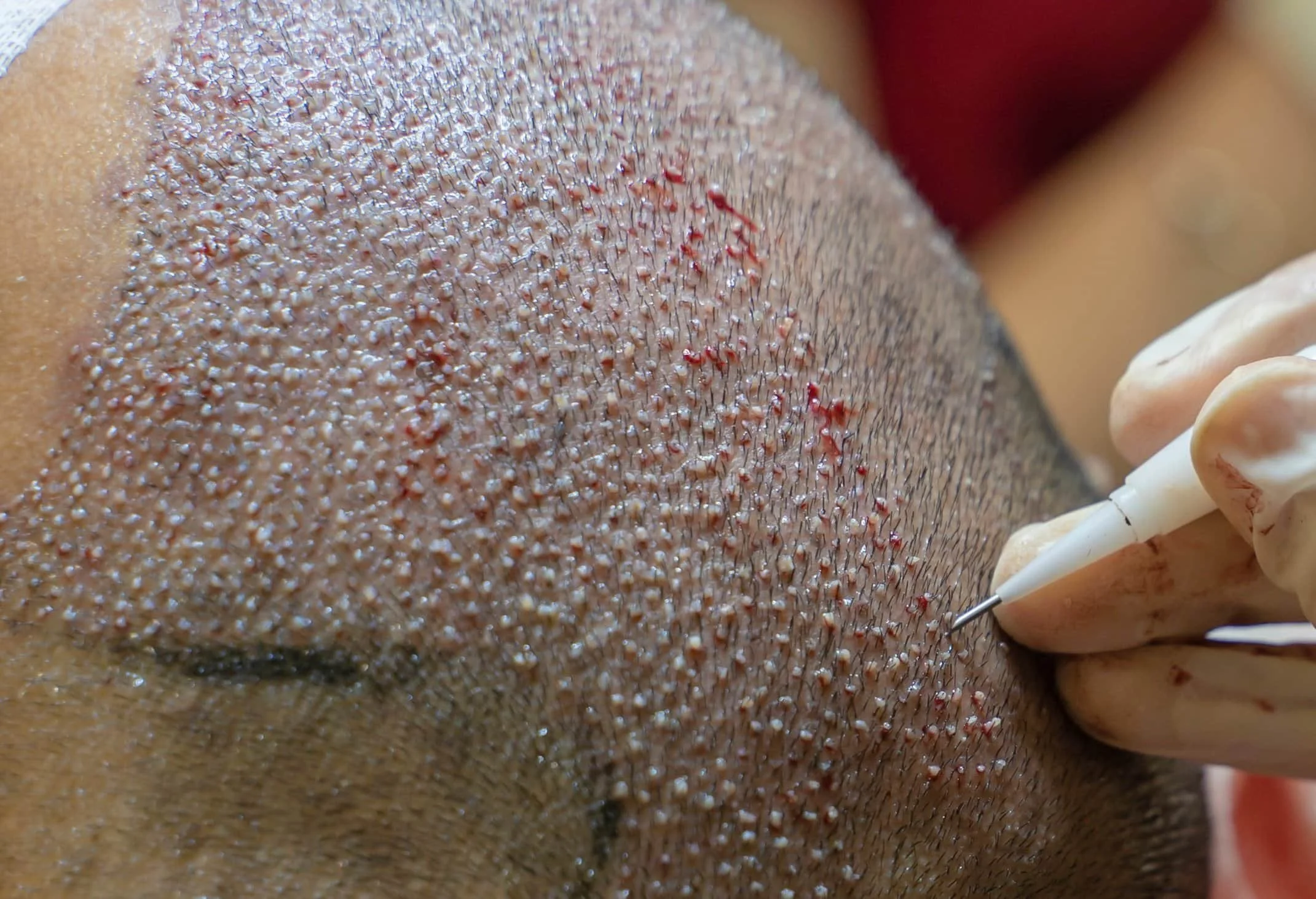
Implantation
What is a FUT Hair Transplant?
Follicular Unit Transplantation is an advanced surgical technique where a narrow strip of healthy donor tissue is carefully removed from the permanent "safe donor zone" at the back of the scalp.
Once harvested, our elite surgical team uses high-powered microscopes to dissect this tissue into its naturally occurring groupings of one to four hairs, known as follicular unit grafts. These intact grafts are then strategically implanted into your thinning or balding areas.
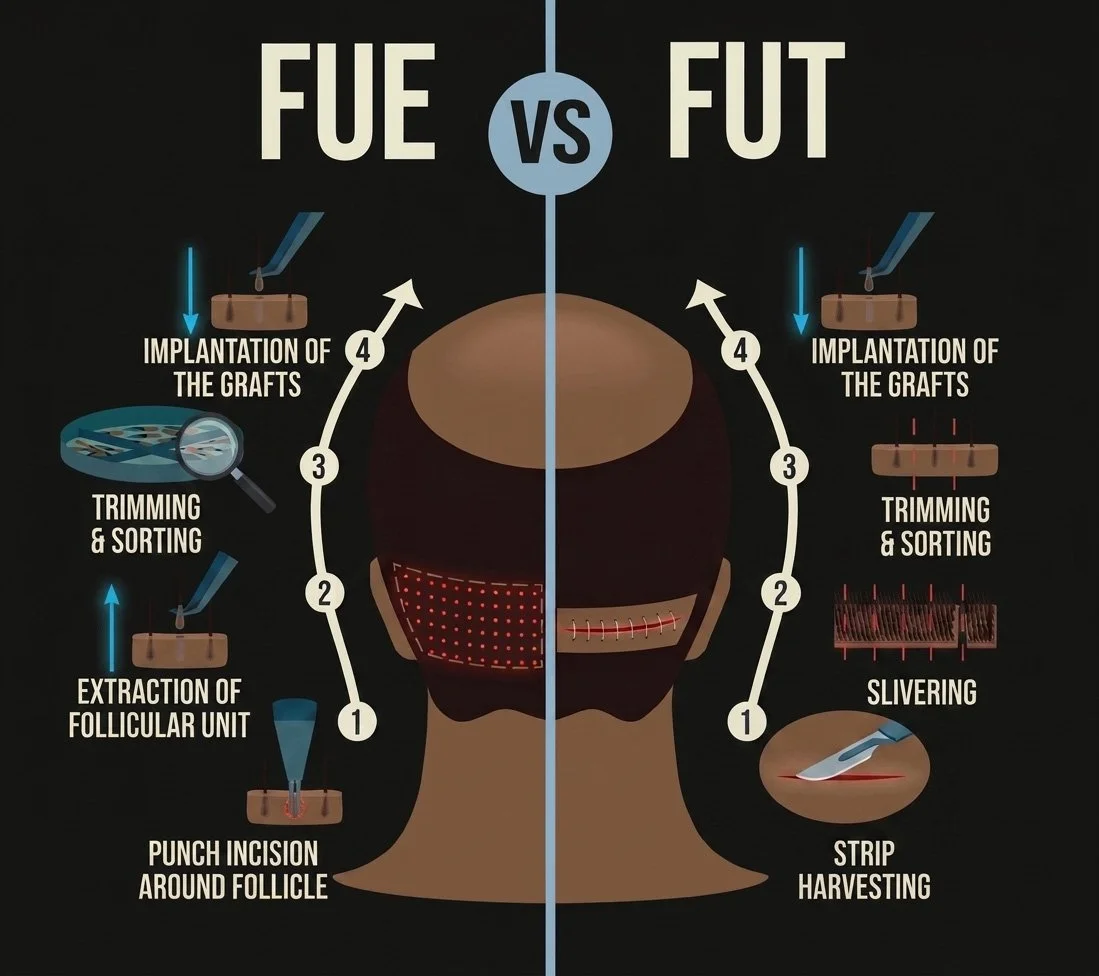
FUE vs. FUT
While both techniques yield beautiful, natural-looking results, the primary difference lies entirely in how the hair is collected from the donor area. You can obtain either hair transplant in Austin at our clinic:
FUT (Follicular Unit Transplantation): Removes a single, continuous strip of tissue, allowing for the extraction of a massive number of pristine grafts in a single session. This leaves a fine, linear scar that is usually hidden by surrounding hair.
FUE (Follicular Unit Extraction): Involves harvesting individual follicular units one by one using a micro-punch tool. This creates small dot-like scars but restricts the maximum number of grafts safely harvestable in a single day to around 3000 follicular units.
Frequently asked questions regarding FUE
What exactly is an FUT hair transplant?
1
Follicular Unit Transplantation (FUT), often called the "strip method," is a time-tested surgical technique where a slim, continuous strip of hair-bearing skin is safely harvested from the permanent donor zone at the back or sides of the scalp. Our specialized surgical team then places this tissue under high-powered microscopes to cleanly separate it into individual follicular unit grafts (groupings of 1 to 4 hairs) before carefully implanting them into your thinning areas.
How does the surgical recovery compare to FUE?
2
Because FUT involves a linear incision closed with microscopic sutures or staples, the initial healing phase in the donor area takes about 10 to 14 days, at which point your stitches are cleanly removed. While FUE donor sites (micro-dots) close up slightly faster, the microscopic recipient areas where the hair is placed heal at the exact same rate for both procedures. Most FUT patients return to light, non-strenuous professional work within just a few days.
Will I be awake during the FUT surgery?
3
Yes, you will be awake, completely relaxed, and comfortable. We administer a local anesthetic to entirely numb both the donor strip area and the recipient placement sites before the procedure begins. While you may feel a brief stinging sensation during the initial numbing process, the surgery itself is virtually pain-free. Patients spend the day chatting with our team, watching movies, or resting.
How visible will the FUT linear scar be?
4
Our clinic utilizes advanced trichophytic closure techniques when closing the donor area. This specialized method allows the edges of the incision to overlap precisely, enabling your natural hair to grow directly through the fine scar line. As long as you do not shave your head completely down to the skin, your surrounding hair will completely drape over and conceal the scar, making it virtually unnoticeable in your daily life.
Can I ever wear my hair short after an FUT procedure?
5
Yes, you can absolutely wear your hair short, such as a standard fade or a classic scissor cut. The linear scar is easily hidden by surrounding hair at a standard length. However, if your long-term style goal is a completely shaved head, a skin-tight buzz cut, or a high skin fade, then an FUE Austin procedure may be a more appropriate choice for your lifestyle, as FUE leaves micro-dot scars instead of a line.
Why choose FUT over an FUE procedure?
6
FUT offers several significant clinical advantages, particularly for advanced hair loss:
Maximum Graft Yield: Extracting a strip allows technicians to cleanly isolate follicles under direct microscope visualization, minimizing graft damage and ensuring the highest possible survival rate.
No Broad Shaving Needed: Unlike FUE, which requires shaving large sections of your donor hair, FUT allows you to keep your surrounding hair long. The hair directly above the strip completely covers your stitches from day one.
Large Sessions: It is the premier choice for transferring a massive volume of grafts in a single day to treat extensive baldness.
Is FUT a good option for treating hair loss in women?
7
FUT is frequently the preferred gold standard for hair loss in women. Because women rarely wear their hair buzzed or exceptionally short, the linear scar is a complete non-issue. Furthermore, because FUT does not require shaving down large zones of the donor area, female patients can walk out of the clinic with their existing hair completely intact and covering the surgical site.
8
What is the average FUT cost in Austin?
Your total financial investment is determined fundamentally by the total number of individual hair grafts required to meet your density goals. On a per-graft basis, FUT hair transplant in Austin is generally more cost-effective than FUE options. This is because the strip harvesting method allows our microscopic team to process a high volume of grafts in a highly streamlined, efficient manner. We provide an exact, all-inclusive breakdown during your private clinical consultation.
Can an FUT linear scar be revised or treated if I want to wear my hair shorter in the future?
9
Yes. If your lifestyle changes years down the road and you wish to wear an exceptionally short haircut, you have excellent options to minimize the visibility of the line. We can perform Scalp Micro-Pigmentation (SMP), a specialized medical tattooing technique that replicates the appearance of natural hair follicles directly within the scar tissue to camouflage it completely. Alternatively, we can later harvest a small number of individual follicles via an FUE Austin session and plant them directly into the FUT scar to break up the line and blend it seamlessly into the surrounding hair.
Can a patient undergo an FUT procedure if they have already had a previous hair transplant?
10
Yes, absolutely. It is very common for patients who are experiencing progressive hair thinning or those who want to achieve maximum density to undergo a subsequent procedure. If your first hair transplant was an FUT, a skilled hair restoration surgeon can often excise the old scar during the second procedure, leaving you with just a single, well-placed linear scar afterward. If your first procedure was an FUE, undergoing an FUT can be an excellent strategic move, as it allows the surgeon to harvest a large volume of grafts from a fresh donor strip without over-harvesting or thinning out the rest of your scalp.