
Austin Hair Transplant - Follicular Unit Extraction (FUE)
If you are exploring permanent solutions for hair loss in Austin, Follicular Unit Extraction (FUE) represents the absolute pinnacle of modern, minimally invasive hair restoration. Designed to treat hair loss in men and hair loss in women alike, an FUE procedure allows patients to regain a full, dense, and completely natural-looking hairline without the linear scarring associated with traditional methods.
At our specialized facility we combine advanced surgical precision with artistic hairline design to deliver life-changing results tailored to your unique anatomy.
Top Austin Hair Transplant: Permanent solution
Key Benefits
Extended donor area, including temples, beard, and body if needed
No linear scar allows for shorter hair styles in the back and sides
No sutures, donor area recovers in around 3-5 days
Less invasive than FUT (strip)
Key Considerations
Required to shave back and sides of head, female clients may prefer FUT (strip) harvesting
Female clients may be able to shave bottom half of scalp and still cover area with longer hair
Procedural steps
-
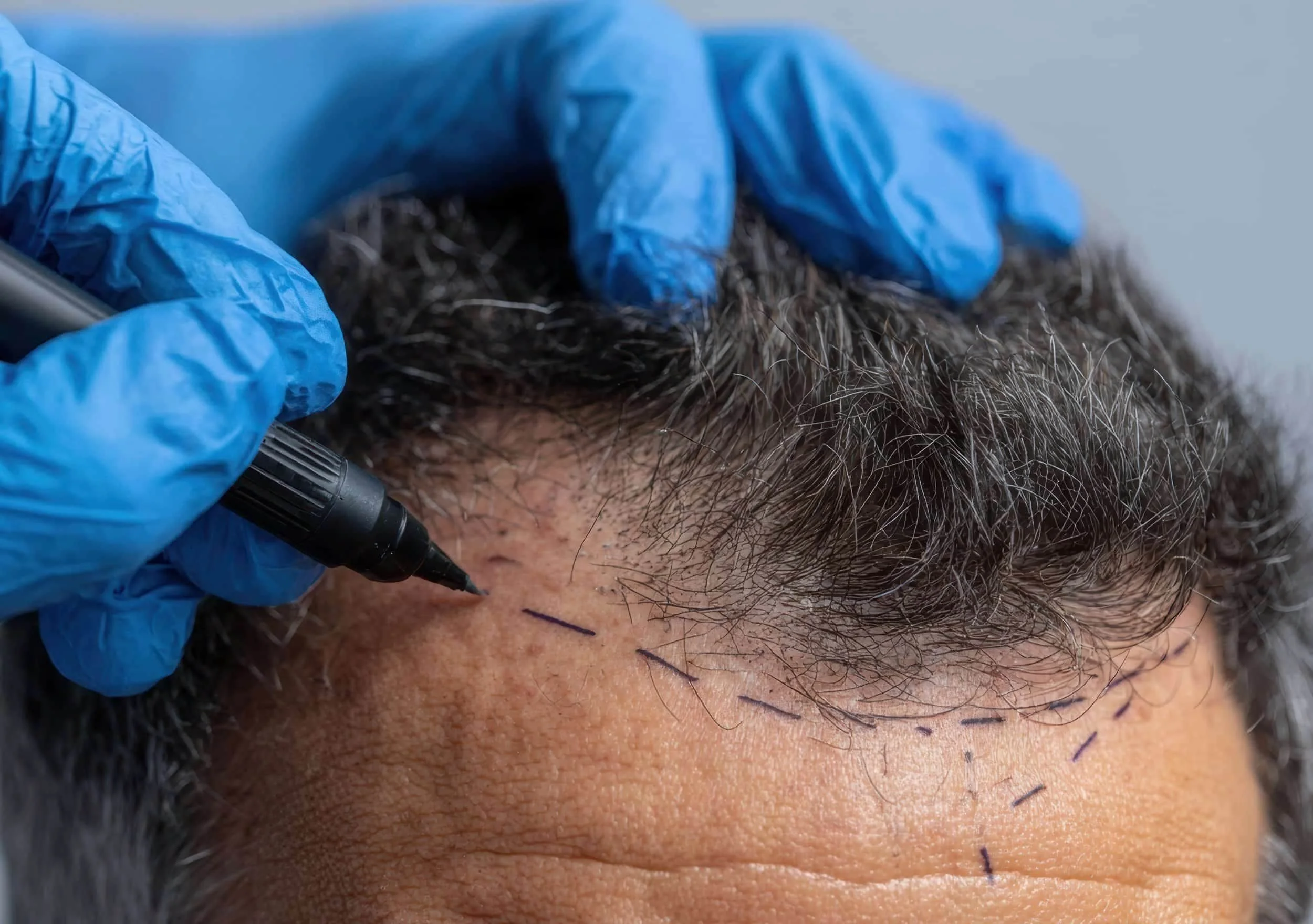
Hairline Design
-
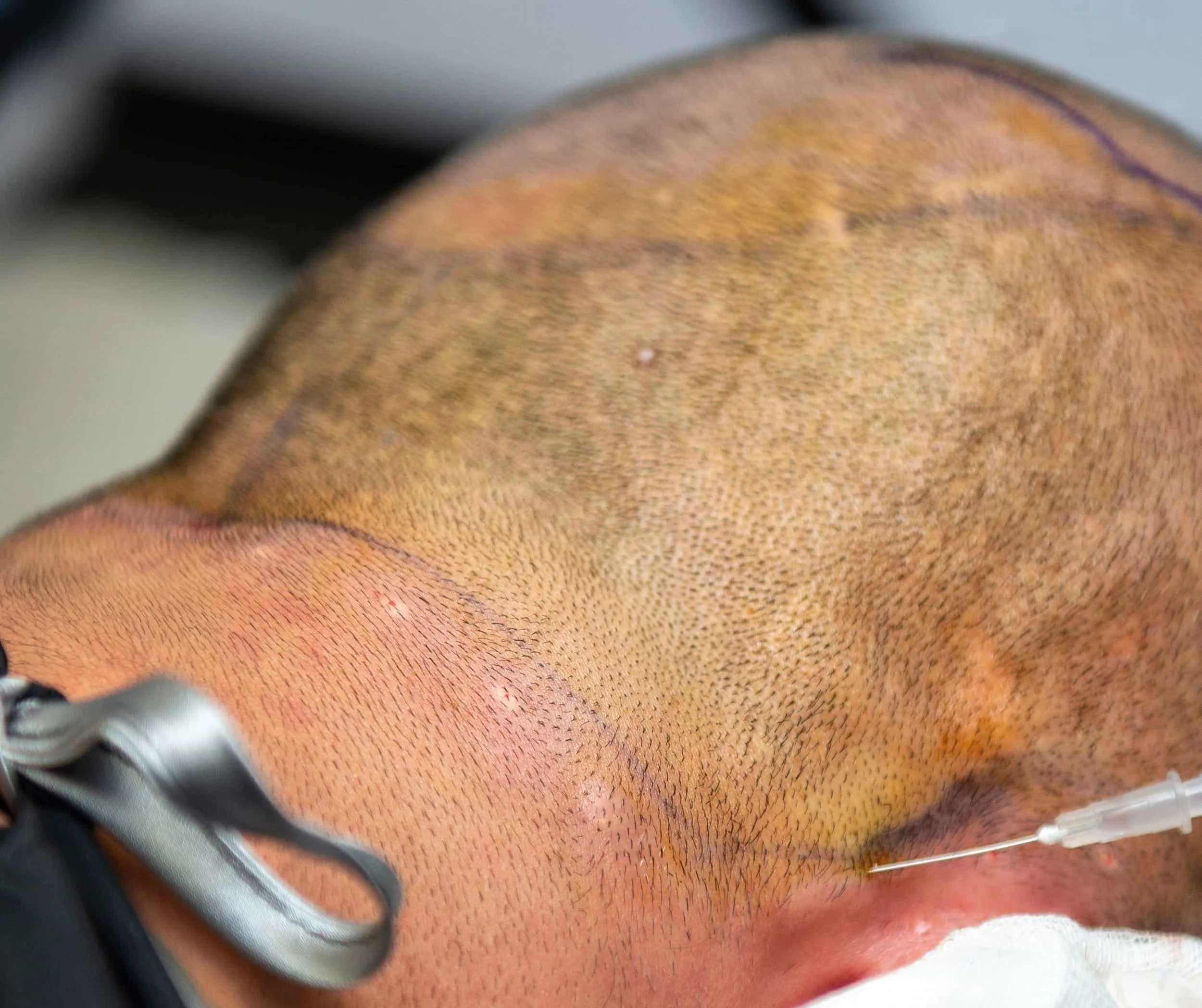
Donor Preparation
-
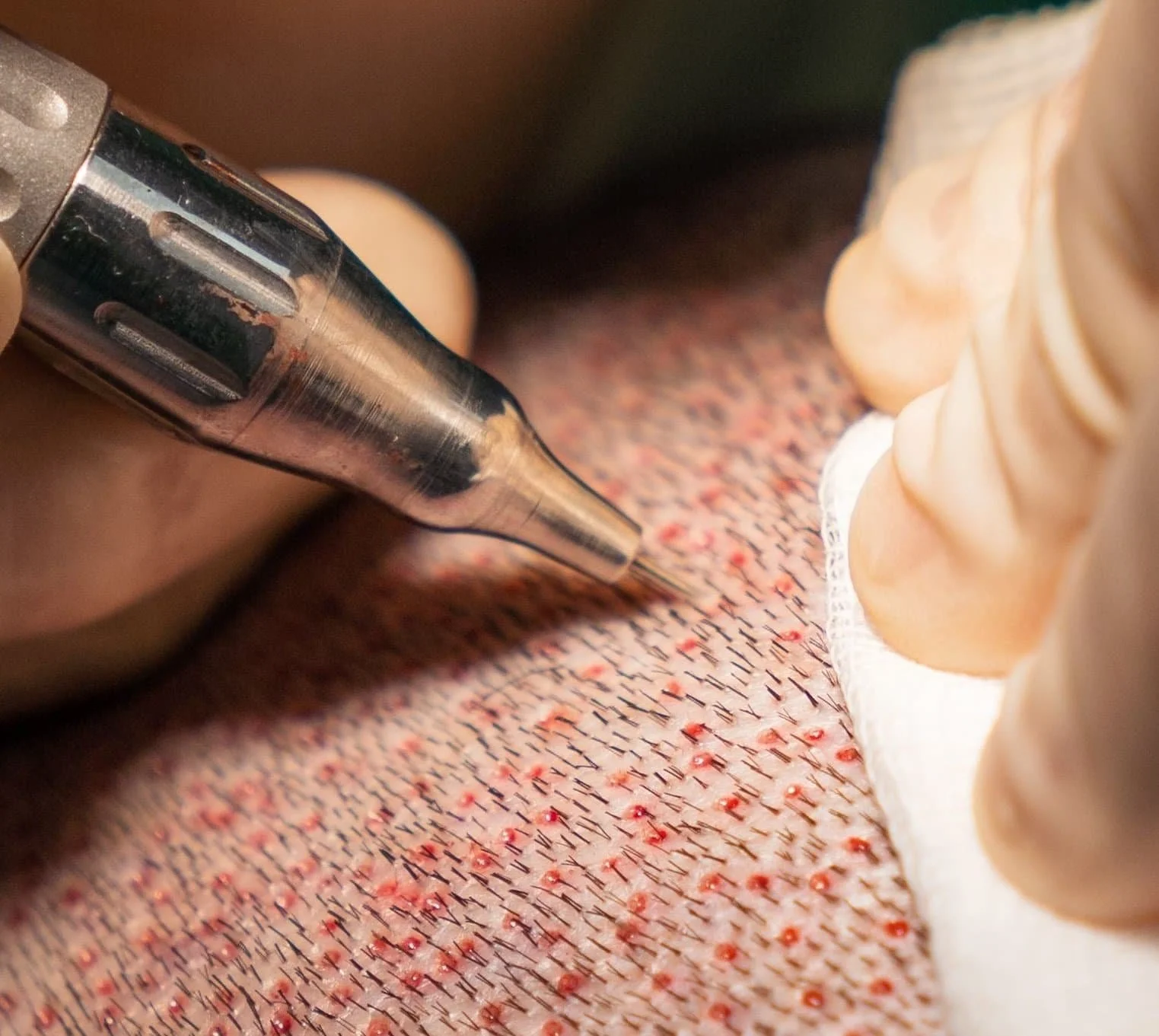
Graft Extraction
-
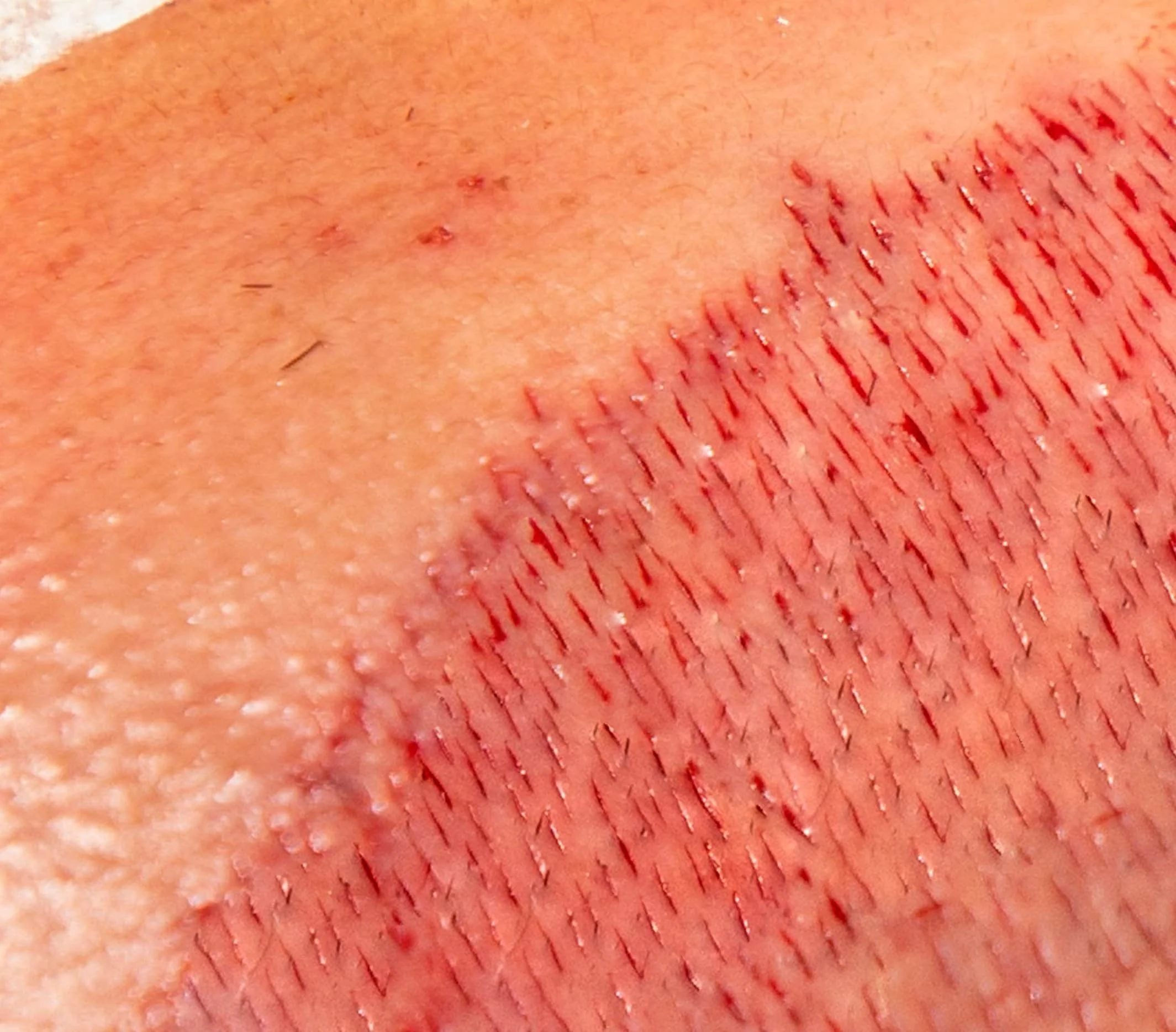
Recipient site creation
-
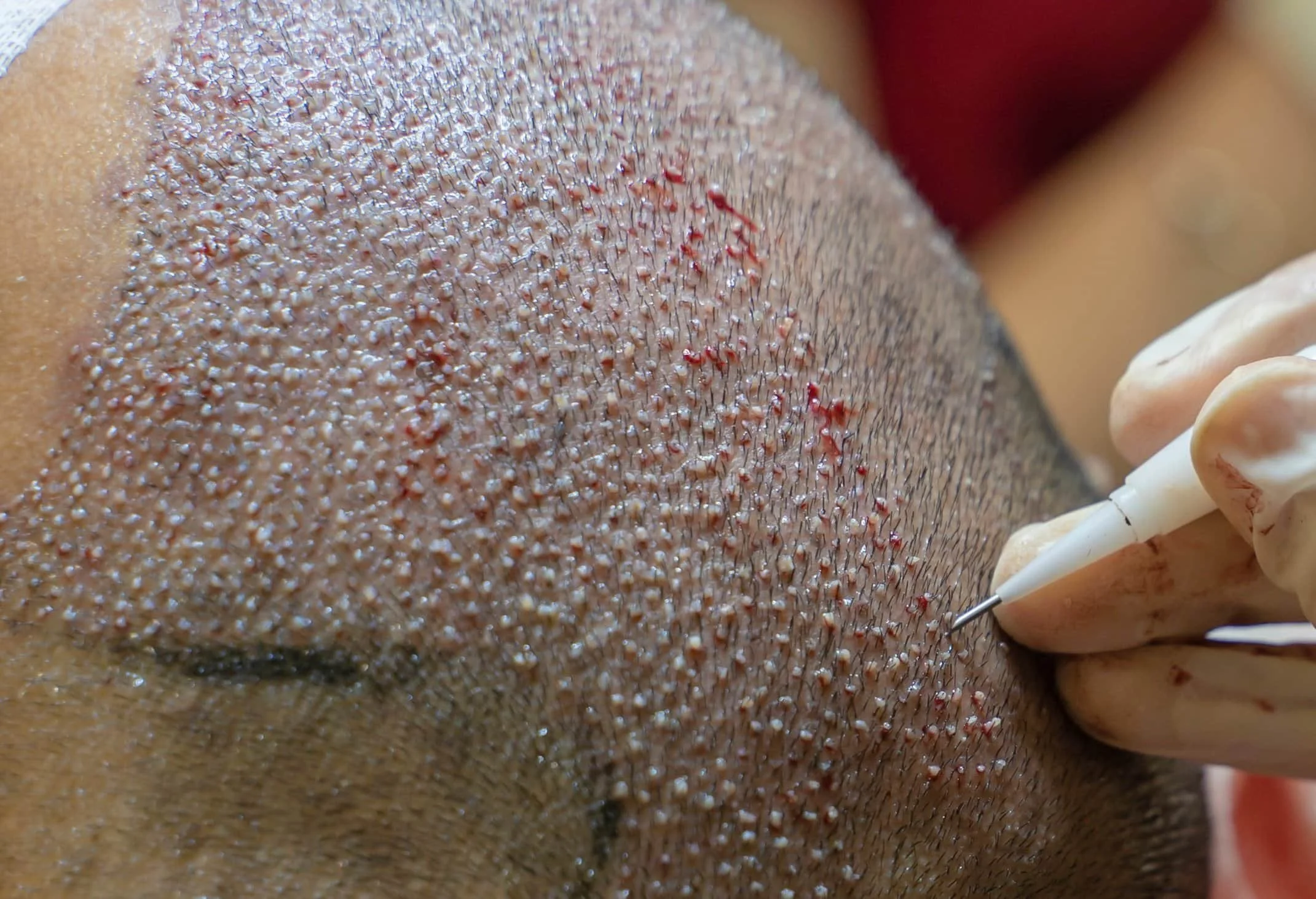
Implantation
What is a FUE Hair Transplant?
Follicular Unit Extraction is a state-of-the-art technique where individual hair follicles—naturally occurring groups of one to four hairs, known as grafts—are harvested directly from a "donor area" (typically the back or sides of the scalp). These healthy, permanent grafts are then meticulously placed into the thinning or balding "recipient areas".
FUE vs. FUT
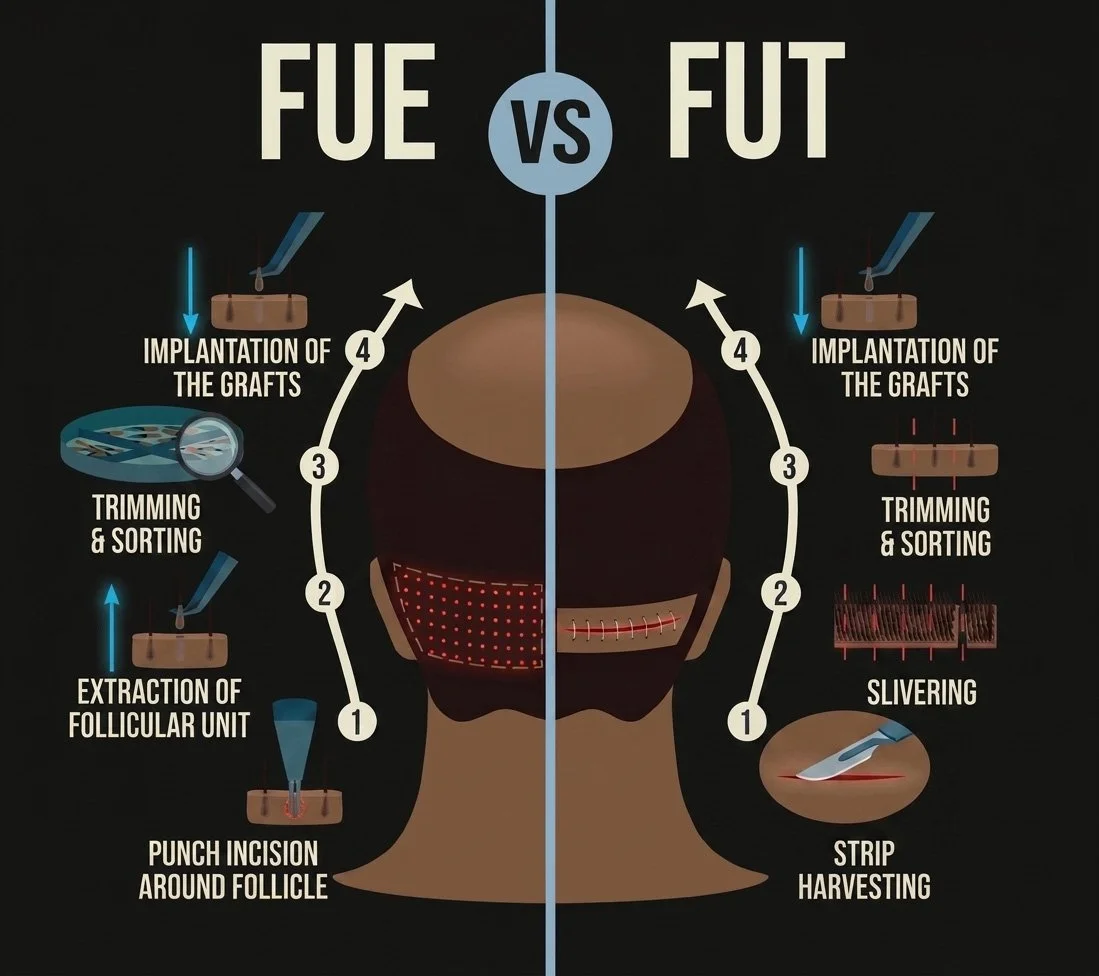
The primary distinction between the two main types of hair transplantation lies in how the hair is collected, both types are performed at our Austin hair transplant clinic:
FUE (Follicular Unit Extraction): Grafts are extracted one by one using a micro-punch tool (typically less than 1mm in diameter). This leaves only microscopic, dot-like scars that become virtually invisible, even if you wear your hair short
FUT (Follicular Unit Transplantation): Also known as "strip surgery," FUT involves removing a single, narrow strip of skin from the donor area, from which individual grafts are microscopically dissected. While highly efficient for massive sessions, it does leave a linear scar.
Frequently asked questions regarding FUE
How exactly does an FUE hair transplant differ from a traditional FUT strip surgery?
1
The primary difference lies entirely in how the hair follicles are harvested from your donor zone. During an FUT (Follicular Unit Transplantation) procedure, a thin, linear strip of scalp is surgically removed and dissected under a microscope. With FUE (Follicular Unit Extraction), we bypass the linear incision entirely. Instead, we use a specialized micro-punch tool to gently extract follicular units one by one. This leaves only microscopic, dot-like scars that are easily concealed, even with very short haircuts.
Is the FUE hair transplant procedure painful?
2
The procedure itself is virtually painless. Before we begin harvesting or placing grafts, we administer a local anesthetic to completely numb both the donor and recipient areas of your scalp. While you may feel a mild pinching sensation during the initial numbing injections, the rest of the day is highly comfortable. Most of our patients spend the day relaxing, watching movies, or listening to music.
How long does an FUE surgery take?
3
Because FUE involves extracting individual grafts one at a time, it is a meticulous, labor-intensive process. A typical session can take anywhere from 4 to 8 hours, depending heavily on the number of grafts required to achieve your desired hair density. For exceptionally large cases, the procedure may be split across two consecutive days to preserve graft viability and ensure patient comfort.
Are FUE hair transplant results permanent?
4
Yes, the results are designed to last a lifetime. Hair follicles harvested from the back and sides of your head are genetically resistant to dihydrotestosterone (DHT)—the hormone responsible for androgenetic alopecia (pattern baldness). When we transplant these resilient follicles into thinning areas, they retain their genetic resistance, meaning they will continue to naturally grow hair permanently.
When will I see my final FUE results?
5
Hair restoration requires patience, as the transplanted follicles must move through a natural growth cycle.
Weeks 2–4: The newly transplanted hair shafts will naturally shed. This is completely normal and expected; the underlying root remains safely embedded.
Months 3–4: Fine, new baby hairs begin to break through the surface of the scalp.
Months 6–9: You will notice a dramatic increase in hair length and density.
Months 12–15: The final, mature result is achieved, with full density and a completely natural texture.
What is the typical recovery timeline after an FUE transplant?
6
Because FUE is minimally invasive, recovery is remarkably rapid. The microscopic punch sites in your donor area generally close up and heal within 3 to 5 days. Any minor swelling or faint pinkness in the recipient area usually fades within a week. Most patients feel entirely comfortable returning to light, non-physical office work within 2 to 3 days post-procedure.
When can I return to exercising or working out?
7
To protect your new grafts and prevent swelling, we recommend a phased return to physical activity:
Days 1–5: Rest and light walking only. Avoid any straining or bending over.
Day 7: You may resume light cardio (like a stationary bike), keeping your heart rate moderate and avoiding heavy sweating.
Day 14: You can safely return to your normal, high-intensity workout routines, weightlifting, and strenuous activities.
Am I a good candidate for an FUE hair restoration?
8
The ideal candidate for an FUE hair transplant has a stable pattern of hair loss and a healthy supply of dense donor hair on the back or sides of the head. During your clinical consultation, we evaluate your scalp laxity, donor hair density, and the progression of your thinning. FUE is a highly effective option for both hair loss in men and hair loss in women. If your hair loss is currently unstable or rapidly progressing, we may recommend pairing the surgery with non-surgical medical hair loss treatments first to establish a solid foundation.
Will I need more than one FUE procedure over my lifetime?
9
It depends entirely on your progressive hair loss. While the hair we transplant is permanent, your surrounding, non-transplanted native hair may continue to thin naturally over time due to aging or genetics. To minimize the need for a future procedural touch-up, we strongly emphasize proactive medical alopecia treatment to preserve and protect your native hair density.
The total investment for your procedure is fundamentally determined by the number of hair grafts required to meet your aesthetic and density goals. Because extracting follicles individually requires a high level of surgical precision and takes more time than strip harvesting, the FUE cost Austin patients expect features a slightly higher per-graft investment than FUT alternatives. We provide an exact, transparent quote during your private, in-person clinical consultation at our downtown Austin hair transplant clinic.