
The Architecture of Realism: Why Graft Direction and Angulation Dictate Hair Transplant Results
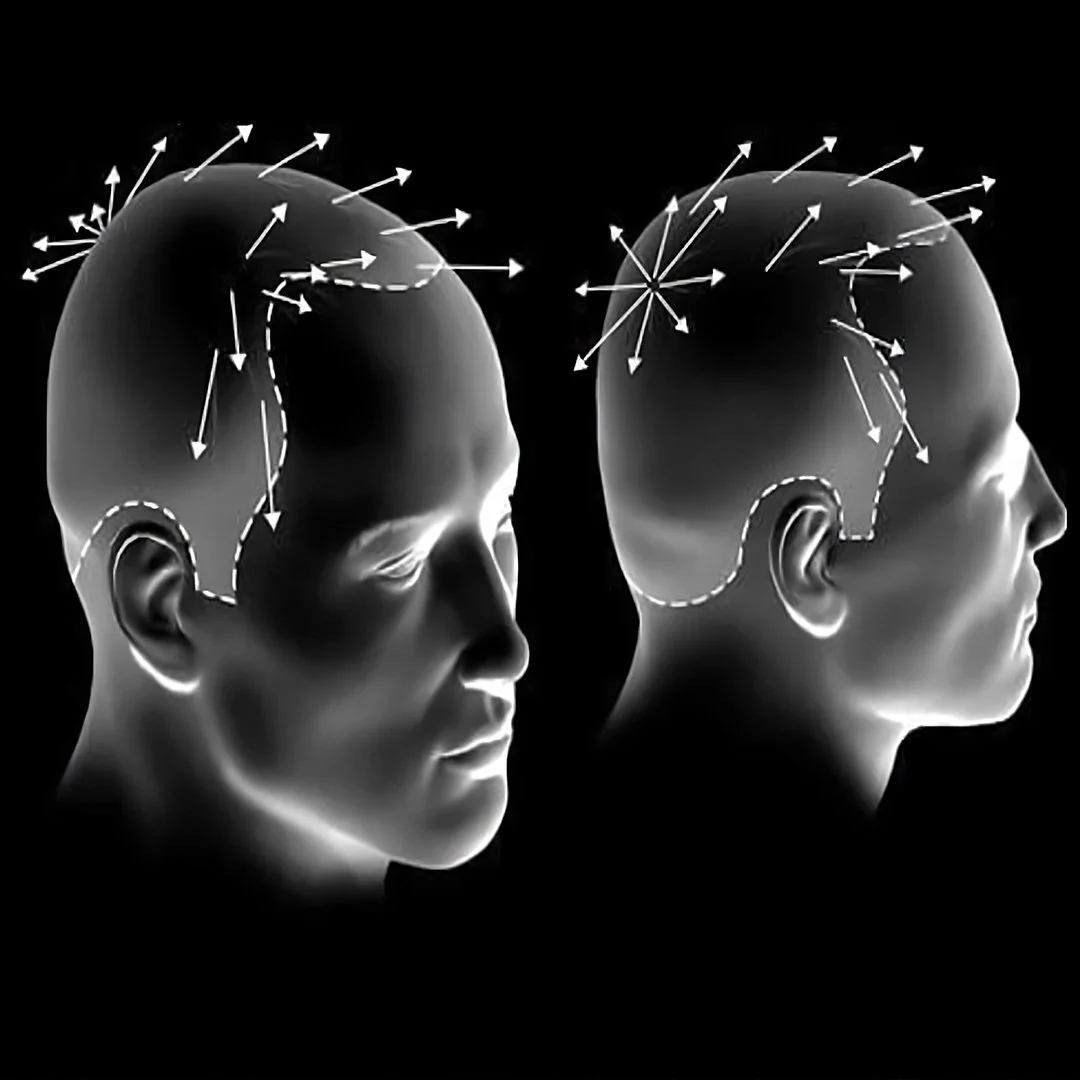
An undetectable hair transplant relies as much on surgical artistry as it does on graft count. By controlling two key variables—exit angle (vertical tilt) and compass direction (rotational flow)—surgeons recreate natural growth patterns across the hairline, mid-scalp, and crown. Utilizing techniques like lateral slit incisions allows grafts to layer naturally and maximize visual density. For anyone considering an austin hair transplant or searching for a top hair transplant in austin, verifying a clinic's technical precision with angulation and placement is essential for achieving a completely natural result.
What to Expect After a Hair Transplant: The Complete Month-by-Month Recovery Timeline
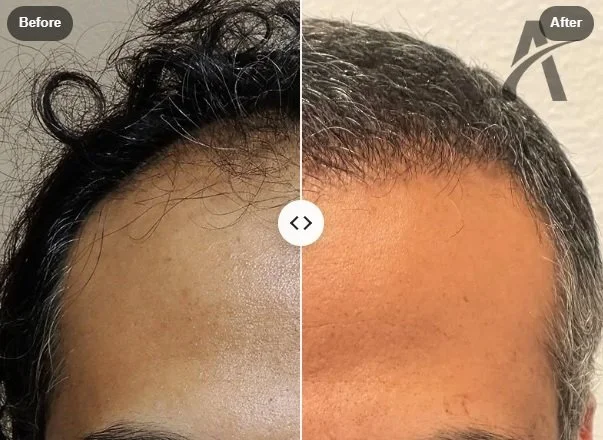
Planning for hair restoration involves more than just the day of the procedure—understanding the recovery timeline is essential for a smooth experience.
Many prospective patients are surprised to learn that transplanted hair actually sheds around weeks 3 to 6 (a totally normal process called "shock loss") before new growth begins around month 3.
FUE vs. FUT Hair Transplants: Which Restoration Method Is Right for You?
FUE or FUT? Let’s clear up the confusion.
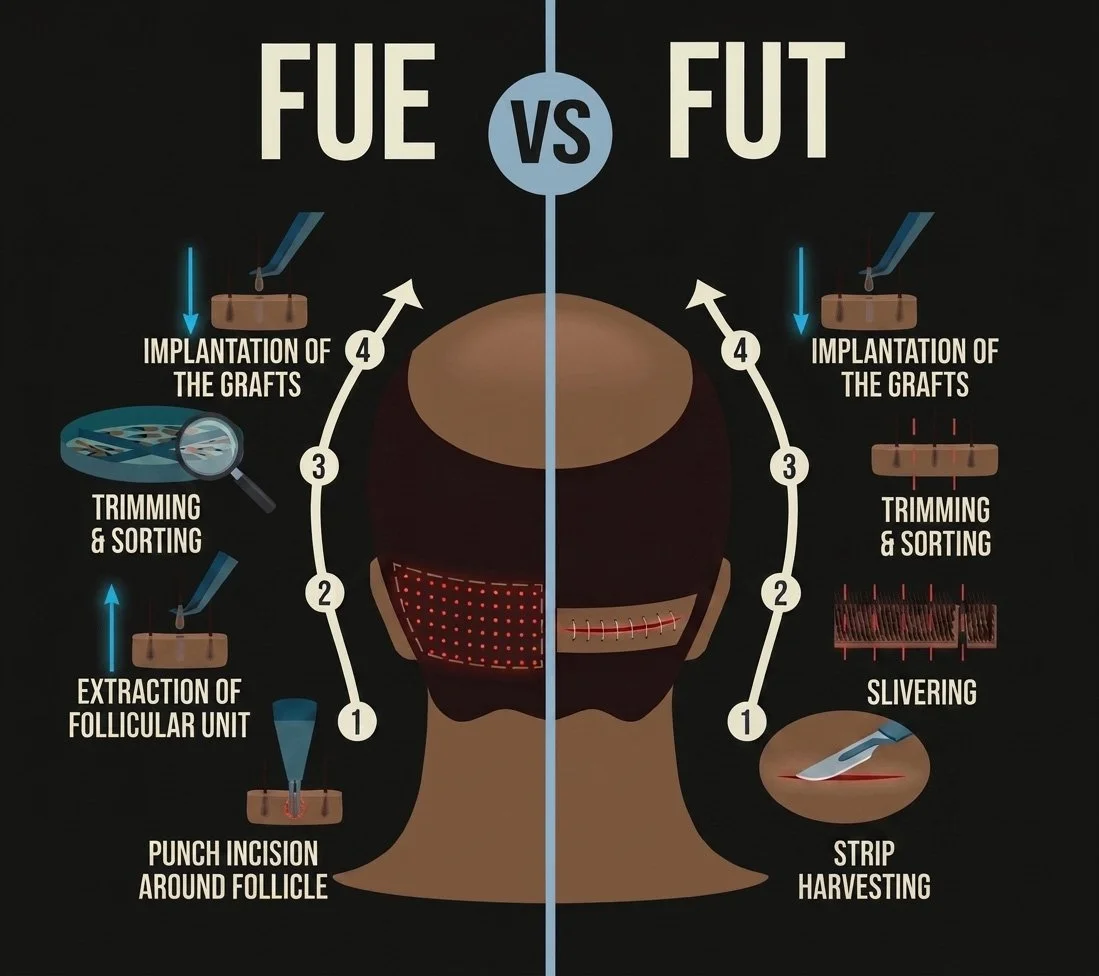
When it comes to hair transplants, there isn't one "best" method—only the method that fits your scalp and lifestyle.
FUE (Follicular Unit Extraction): Individual follicles are extracted one by one. Perfect if you want minimal downtime and love wearing short haircuts or fades. FUT (Follicular Unit Transplantation): A narrow strip of donor tissue is harvested for maximum graft yield in a single session. Ideal for advanced coverage if you keep medium-to-longer hair.
Why Punch Size Matters in FUE: Protecting Your Donor Site for Natural Results
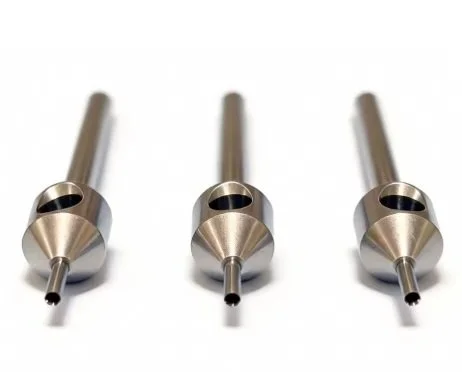
When getting an Austin hair transplant, preserving the donor site is just as critical as designing the hairline. In modern FUE hair transplant in Austin, using an ultra-fine punch size under 0.9mm in diameter is key to achieving natural results. Micro-punches heal in 4 to 7 days, leave virtually invisible microscopic scars (even with short hair), and protect surrounding hair follicles for future density. While refined micro-extraction techniques can impact hair transplant Austin cost, choosing a clinic that prioritizes donor preservation ensures superior long-term results.
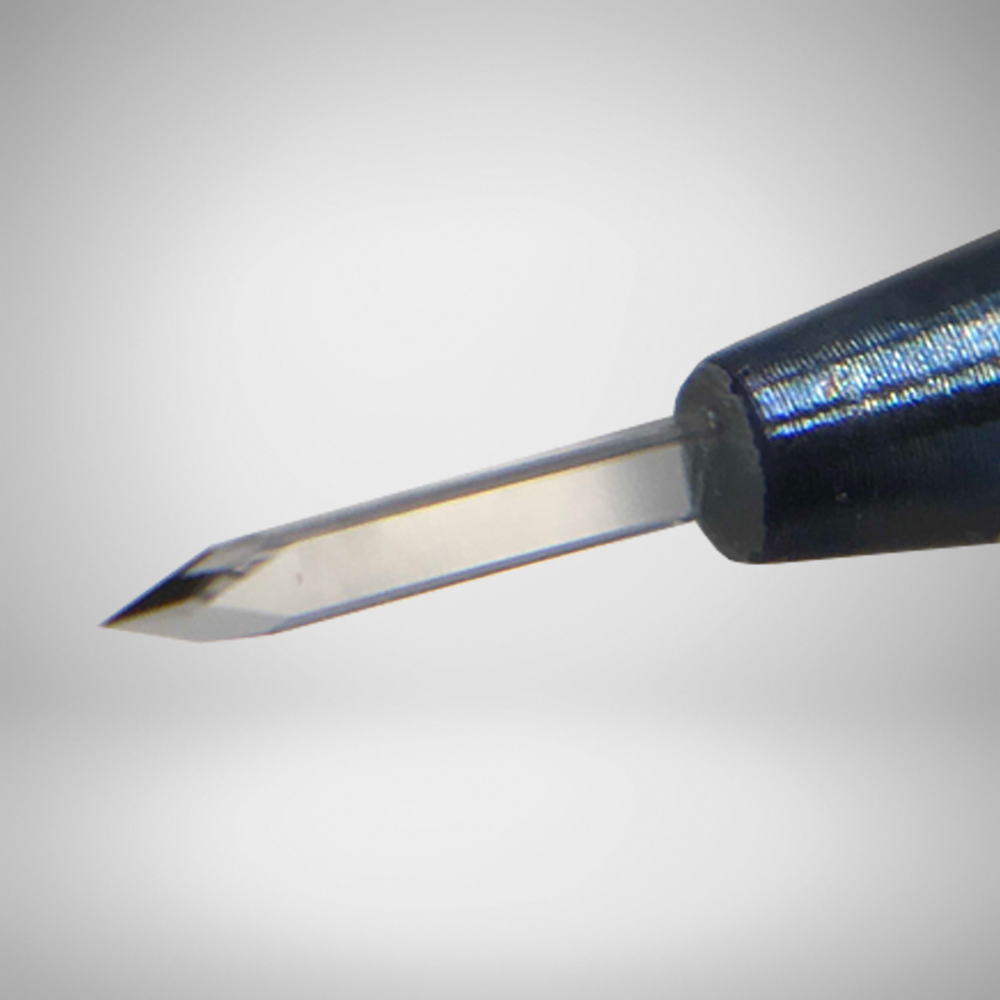
Sapphire vs. Steel: The Science Behind Recipient Site Creation
Sapphire vs. Steel: The Crystalline Edge
While the choice of extraction tool gets most of the spotlight, the instrument used to create your recipient sites determines how densely and naturally your new hair will grow. The modern debate centers on Sapphire blades versus traditional surgical steel.
Crafted from single-crystal synthetic sapphire, these gemstone blades rank near the top of the hardness scale. Unlike stainless steel, which undergoes subtle microscopic dulling and "tissue drag" after a few hundred incisions, sapphire maintains a flawless, razor-sharp edge across thousands of sites. This pristine crystalline geometry creates clean, V-shaped micro-channels instead of flat slices, resulting in a snugger fit for the grafts that minimizes "graft popping." For the patient, this cleaner tissue cleavage translates to significantly less post-op swelling, smaller scabs, and a healing timeline that is up to 25% faster than standard steel.
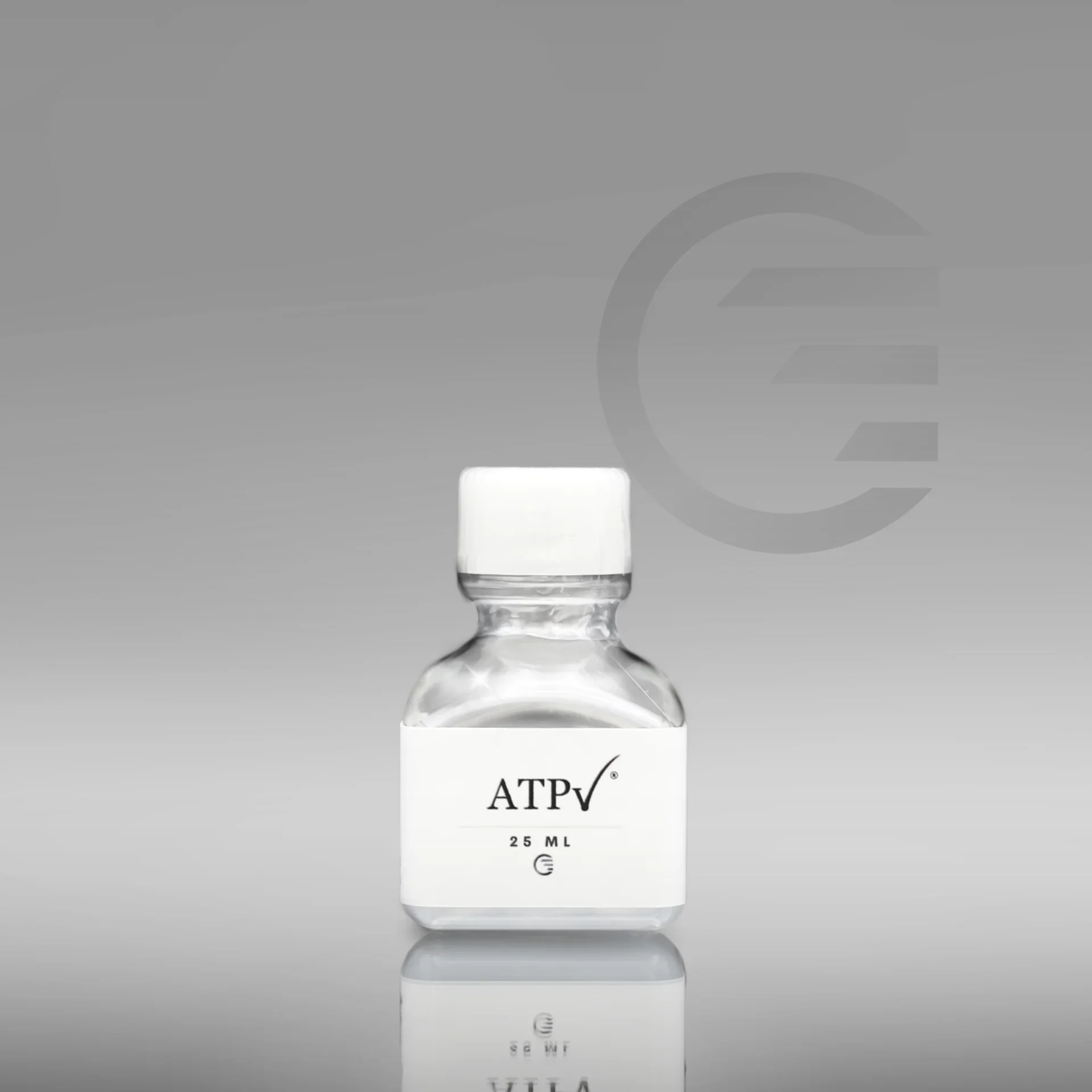
Choosing the Best “Holding Solution” for Hair Grafts: What the science says.
The Next Frontier: Giving Grafts an "External Battery Pack"
While traditional holding solutions simply slow down a hair follicle's decline after extraction, the latest breakthrough in hair restoration takes a more active approach: enhancing storage media with Liposomal Adenosine Triphosphate (ATP).
The moment a hair graft is removed from the scalp, its oxygen supply vanishes, causing its internal energy (ATP) production to plummet. Without this energy, the cell’s vital fluid pumps fail, leading to cellular swelling and death. Wrapping synthetic ATP in microscopic lipid bubbles allows it to pass directly into the cells, keeping those pumps running while the graft is out of the body.
Clinical data shows that this "external battery pack" doesn't just keep cells intact during long FUE sessions; it also provides an incredible safety buffer that can accelerate early growth timelines from the typical six months down to just three or four.